Architecture / Data / AI / Leadership
Connecting data, systems & people.Advancing healthcare & research.
I’m Gabriel Mongefranco, an enterprise and data architect with twenty years in healthcare, research, and technology. I help investigators, clinicians, and executives get answers from their data by designing the data systems and software they need, and by building the teams that run them. Recent work includes a common data model for wearable research data at the University of Michigan, a tool that cleans Fitbit sleep data for more than 15 research studies, and readmission dashboards that helped hospitals avoid more than $5 million in federal penalties.

Selected work
A few recent projects.
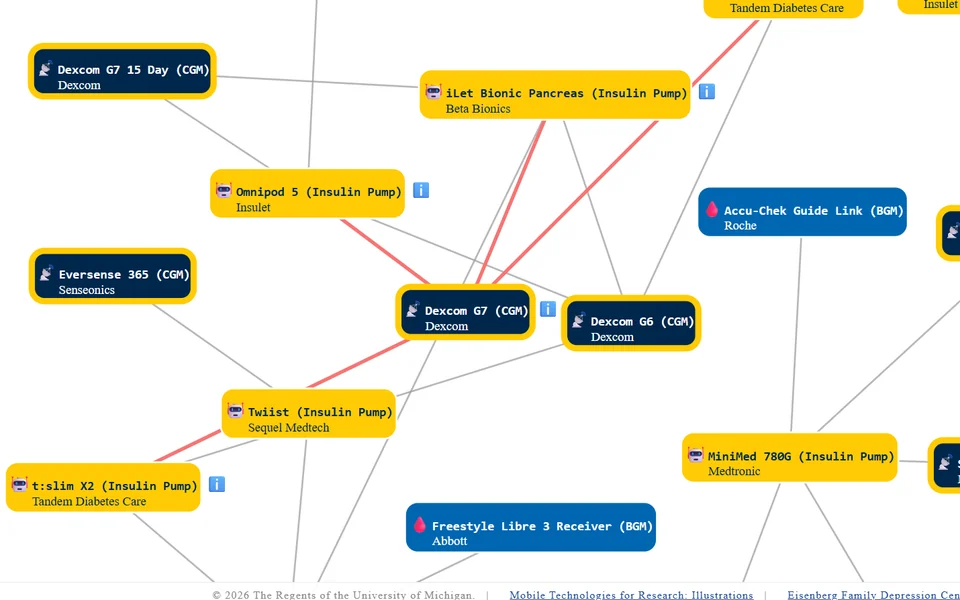 University of Michigan / ResearchMobile & wearable dataA common data model and pipelines for research using connected devices.The university’s standard data flow for mobile research data, more than 100 technical articles, and open-source tools. Sleep automation used by 15+ studies and described in a 2025 paper in SLEEP.Read overview In use
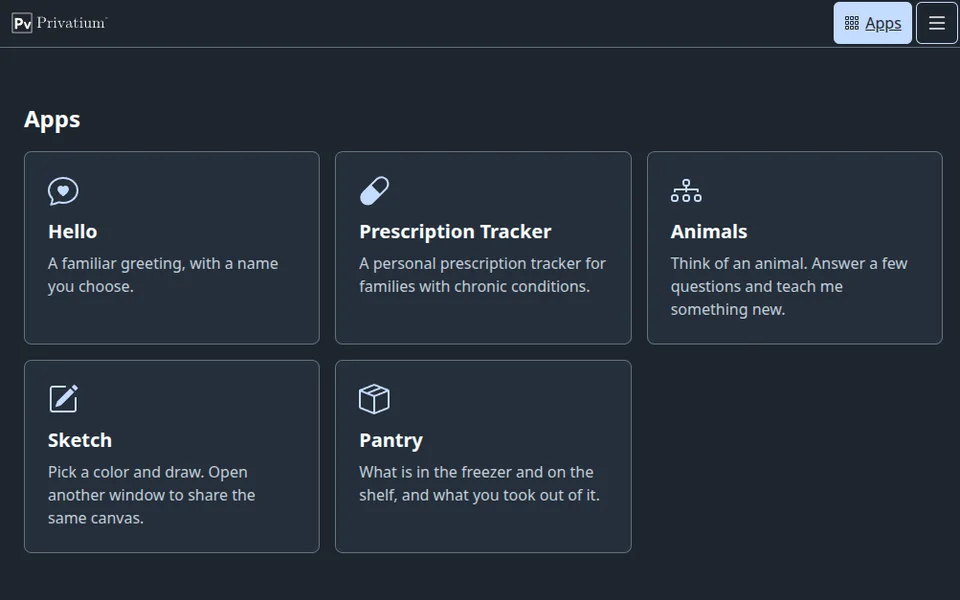 Personal / Open sourcePrivatiumA framework for small personal apps that keep your data on hardware you control.Pre-release, version 0.3.2. Your records are plain text files you can read and back up, and the SQLite index is only a cache the program can rebuild.View project In development
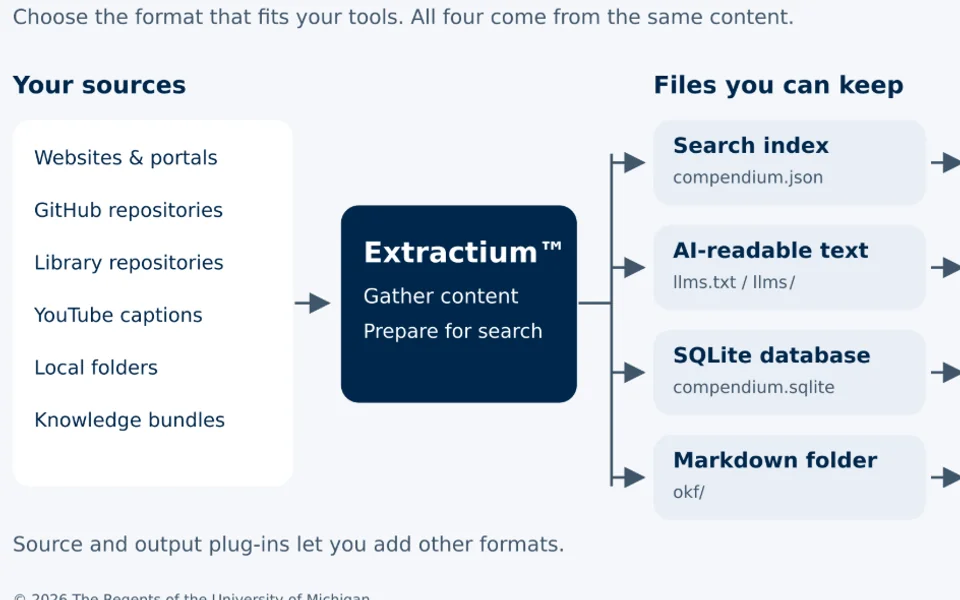 University of Michigan / Research softwareExtractium™Builds a portable knowledge index, called a compendium, that any language model can use.One build writes a search index, llms.txt files, a SQLite database, and a Markdown folder, and none of them needs a server.Read overview In use
Example project
A standard way to collect wearable research data
The problem. Research teams collected wearable data one study at a time, through vendor APIs or exported files. That approach doesn’t work well for hundreds of participants. It leaves large sensor datasets in files that are slow to analyze, and it makes the NIH rules for keeping data long term hard to meet.
My part. I designed the standard data flow for mobile and wearable research data at the University of Michigan, and the common data model behind it. The flow goes from the device and the vendor platform to a study database, analysis, long-term storage, and a repository linked to the health record. I also documented the whole process. The Depression Center’s Health Research Resource Library has more than 100 technical articles I wrote on collecting and processing wearable data. The center’s GitHub has the open-source tools that go with them.
The result. A research team can now start with a documented standard and working code instead of designing its own. The library and the code get more than 500,000 views a year, from people in 188 countries.
Choosing the simplest tool that works
At a university, people start using a tool sooner when it needs no installation, no server, and little new approval. So I look for that kind of solution first.
Sleep data cleaning
- Problem
- A research lab cleaned Fitbit sleep data by hand, night by night.
- Usual answer
- A Python or R pipeline the lab would have to install and maintain.
- What I did
- Built the cleaning steps in Excel and Power Query, which most research teams already have. One click refreshes the results.
- Result
- Used by more than 15 research studies at multiple universities.
Collecting sleep diaries
- Problem
- Participants needed to report when they tried to sleep and when they woke.
- Usual answer
- A study app or a web survey with a login.
- What I did
- Participants text a shared mailbox, and a Power Automate flow parses the messages into a table the pipeline reads.
- Result
- Participants don’t need an app or an account. A 2025 letter in the journal SLEEP describes timestamped text messages as a low-burden method.
AI tools for sensitive research data
- Problem
- Researchers wanted AI assistance on files that cannot leave the institution.
- Usual answer
- A hosted AI service and a security review for every dataset.
- What I did
- Field Station AI runs language models in the browser from one HTML file. Extractium™ saves its knowledge index as ordinary files.
- Result
- Neither tool needs a server, a database, or an API. Regulated data may still need institutional review, as the Field Station AI page explains.
How I build
Building with AI coding agents
I write much of my recent code with AI coding agents, and I build tools that keep their work contained and easy to review. Agent Airlock runs agents and their tools in a rootless container that can see only the project folders, not the rest of the computer. PeerFoil, still in development, has agents from a different AI model family review the changes that coding agents make.